
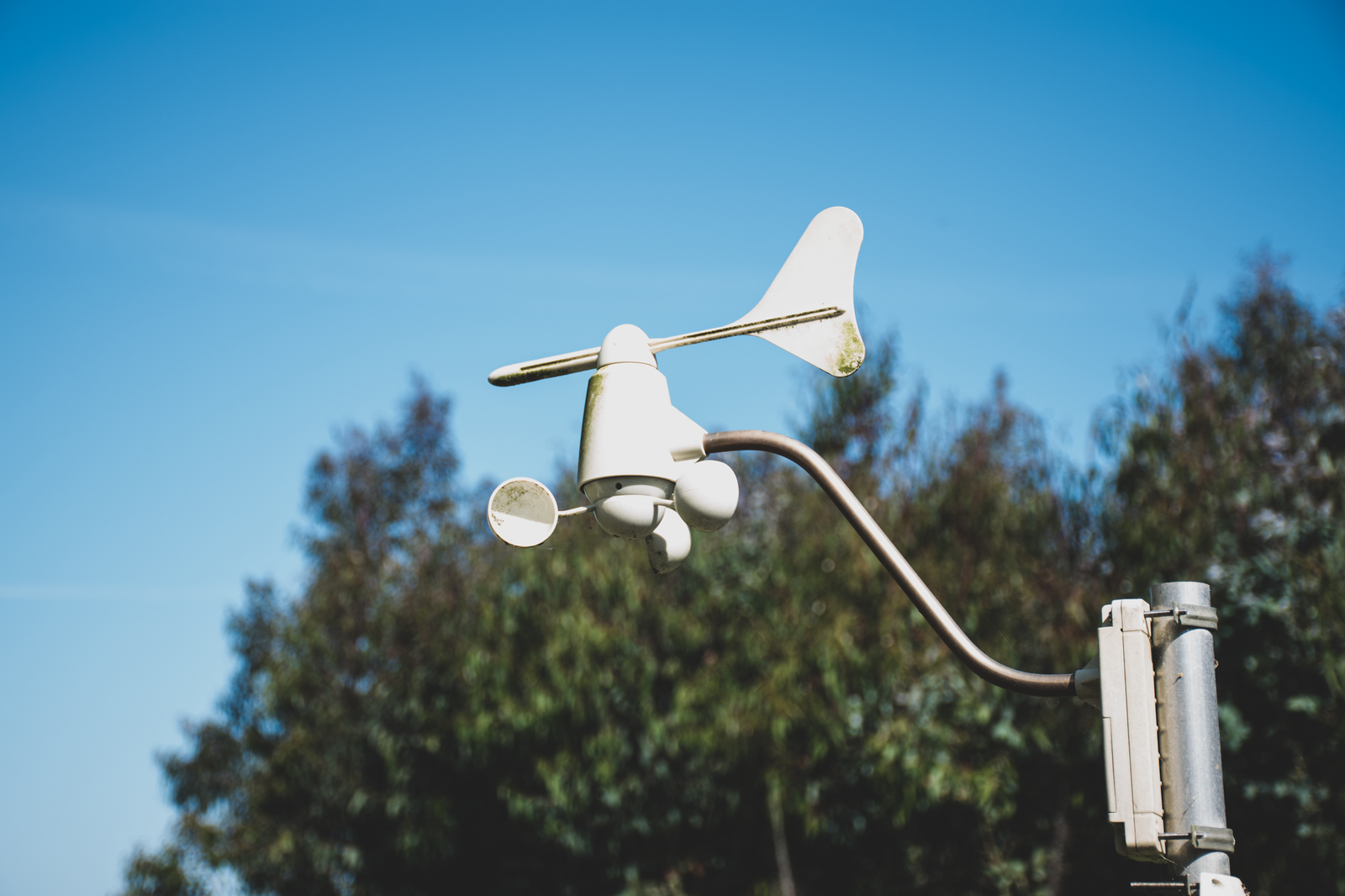
Anemometers are instruments that measure wind speed, but the two designs you’ll encounter most often — cup and ultrasonic — measure it in very different ways.
Mechanical Cup Anemometers
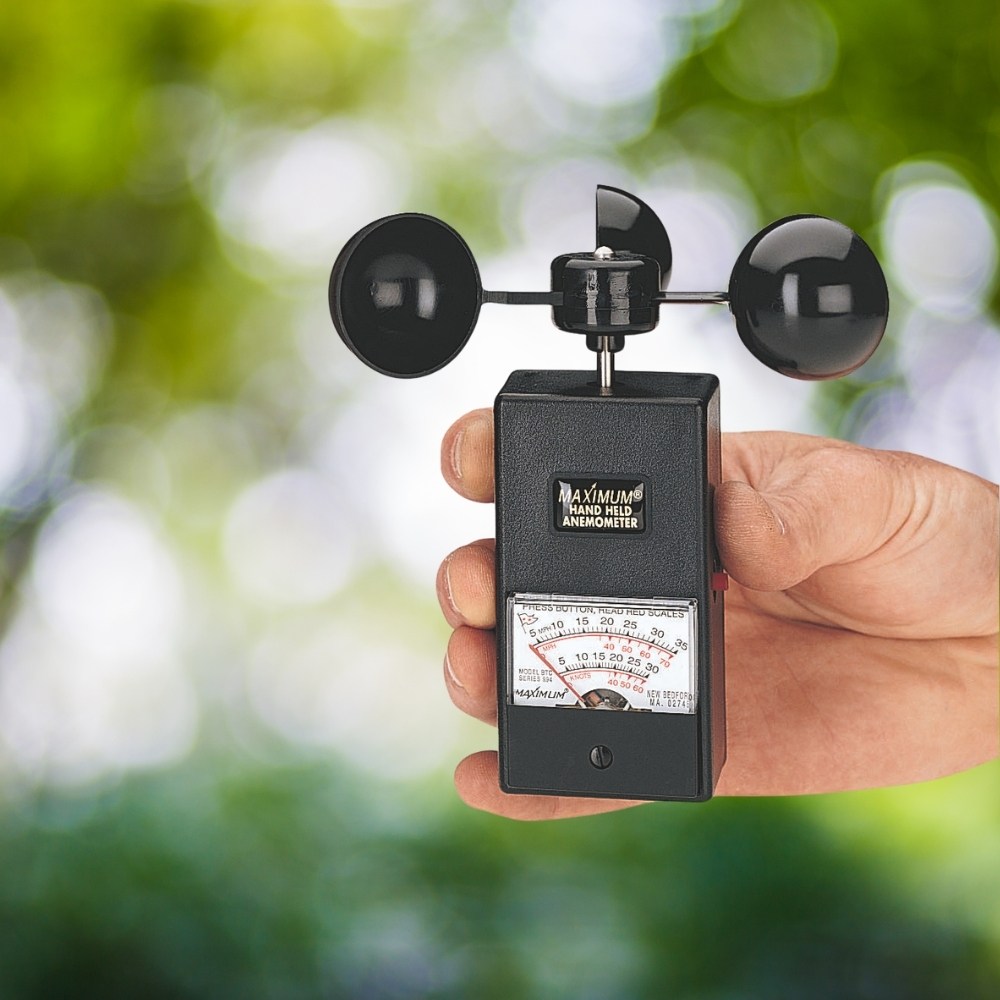
Cup anemometers convert wind into rotation. Three or four cups mounted on horizontal arms spin around a vertical axis as the wind pushes against them, and their rotational speed is directly proportional to the wind speed. This is the design behind classic instruments like the Maximum Vigilant — no batteries, no electronics, just wind turning a shaft that drives a mechanical or magnetic readout. It’s simple, durable, and has been the industry standard for over a century.
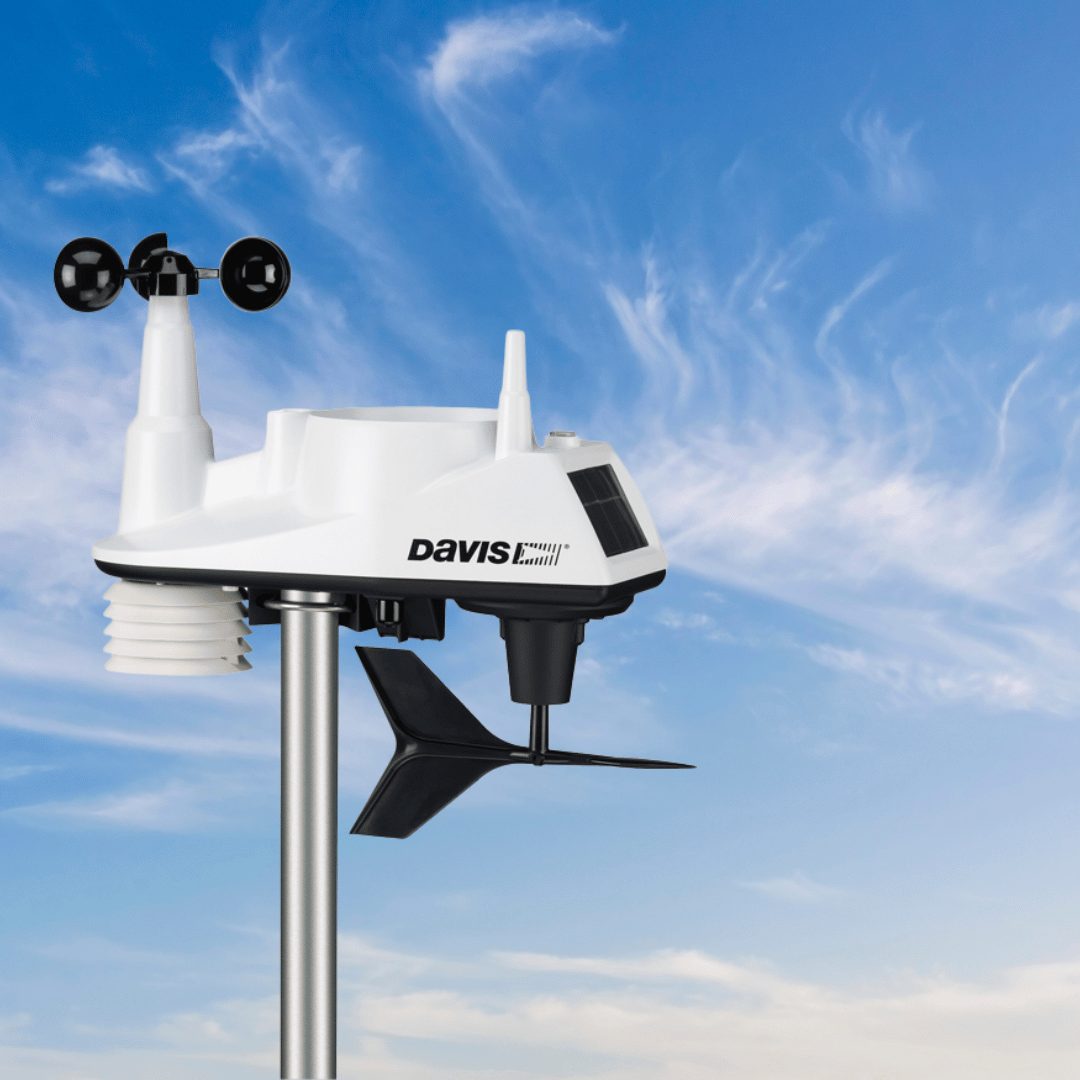
Both the Davis Vantage Vue and Vantage Pro2 also use a cup anemometer; however, in this case, the spinning is tracked electronically and delivered digitally.
Ultrasonic Anemometers
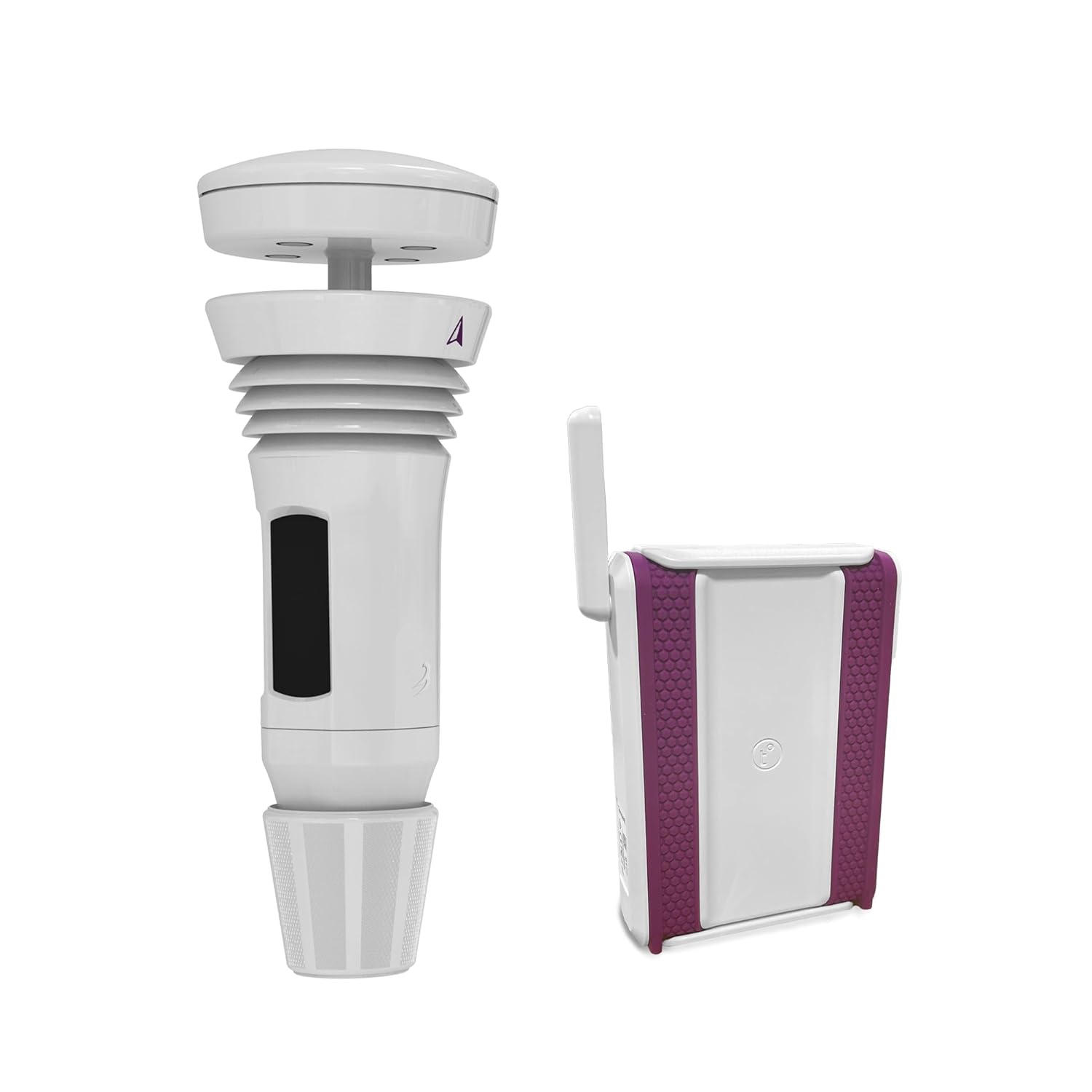
Ultrasonic anemometers have no moving parts at all. Instead, they use transducers to send high-frequency sound pulses across a small gap and measure how long each pulse takes to arrive. Wind speed and direction shift that travel time slightly, and the sensor calculates speed from the difference. Because there’s nothing to spin or wear out, ultrasonic designs tend to hold their calibration longer and perform better in freezing or icy conditions where cups can seize up.
The Tempest Weather System uses ultrasonic technology.
Analog vs. Digital: Trade-offs That Actually Matter
Digital anemometers generally edge out analog mechanical designs on raw accuracy and add features like peak gust logging and averaging — advantages that come from electronic sensors and onboard processing. But analog cup instruments have their own case: they’re wind-powered with no batteries to replace, mechanically simple (fewer failure points), and often a fraction of the cost of a comparable digital setup.
The Maximum Vigilant is a good example of the analog case done well: fully wind-powered, no external power source needed, displaying 0–100 mph (0–160 km/h) with a built-in Gust Register that captures the hardest gust even if you weren’t watching when it happened. It’s backed by a five-year warranty and works whether or not the power’s on.
The Maximum Merlin represents the digital side of that trade-off. It reports current, average, and peak wind speed across four selectable modes — Present, Peak, Average, and a genuinely useful Forecast mode that compares the last 12 minutes of average wind speed against the prior 12 minutes. Pair it with the Maximum Mystic thermometer-barometer and it adds wind chill reporting; add Wi-Fi and you can share data online. That flexibility comes at a higher price point than a pure mechanical unit, but for anyone building a fuller home weather station, the extra modes and integration options are hard to replicate with an analog gauge alone.
Who Uses Anemometers, and Why
- Weather forecasting and home weather stations — wind speed is a core input for meteorologists and hobbyists alike, feeding into local forecasting and storm tracking.
- Sailing and boating — wind speed and gust data directly inform sail trim and safety decisions on the water.
- Aviation — pilots rely on accurate wind readings for takeoff, landing, and in-flight decision-making.
- Wind energy assessment — anemometers are used to evaluate a site’s wind resource before committing to turbine placement.
- Weather hobbyists — for anyone tracking conditions at home, an anemometer turns “it’s windy out” into an actual number worth logging.
Choosing the Right Anemometer
A few questions narrow the decision quickly:
- Do you need gust memory or just a current reading? If you want to know how hard the wind blew while you were away, look for a Gust Register (analog, like the Vigilant) or a Peak mode (digital, like the Merlin).
- Do you want forecasting, not just measurement? Only digital units like the Merlin offer trend-based forecast modes.
- Do you want to share data online? Wi-Fi capability is a digital-only feature.
- What’s your budget and tolerance for batteries? Wind-powered analog units run indefinitely without power management; digital units need more setup but reward you with more data.
Installation and Accuracy Tips
Placement matters more than the instrument itself for getting accurate readings. Wind sensors are ideally mounted around 10 meters (33 feet) above ground level, and the sensor should be elevated well above any nearby obstruction — trees, rooflines, or structures within roughly 150 meters — to avoid turbulence skewing the reading. For most home installations, that means mounting as high and as clear of your own roofline and nearby trees as practically possible, with a mast or pole extension if you’re short of that ideal height. Periodic calibration checks and keeping mechanical cups free of debris (ice, leaves, spiderwebs) will keep either design reading true over time.
Whether you land on a wind-powered analog gauge like the Vigilant or a full-featured digital unit like the Merlin, the right anemometer comes down to matching the instrument to what you actually want to know — a snapshot, a gust history, or a forecast trend.