
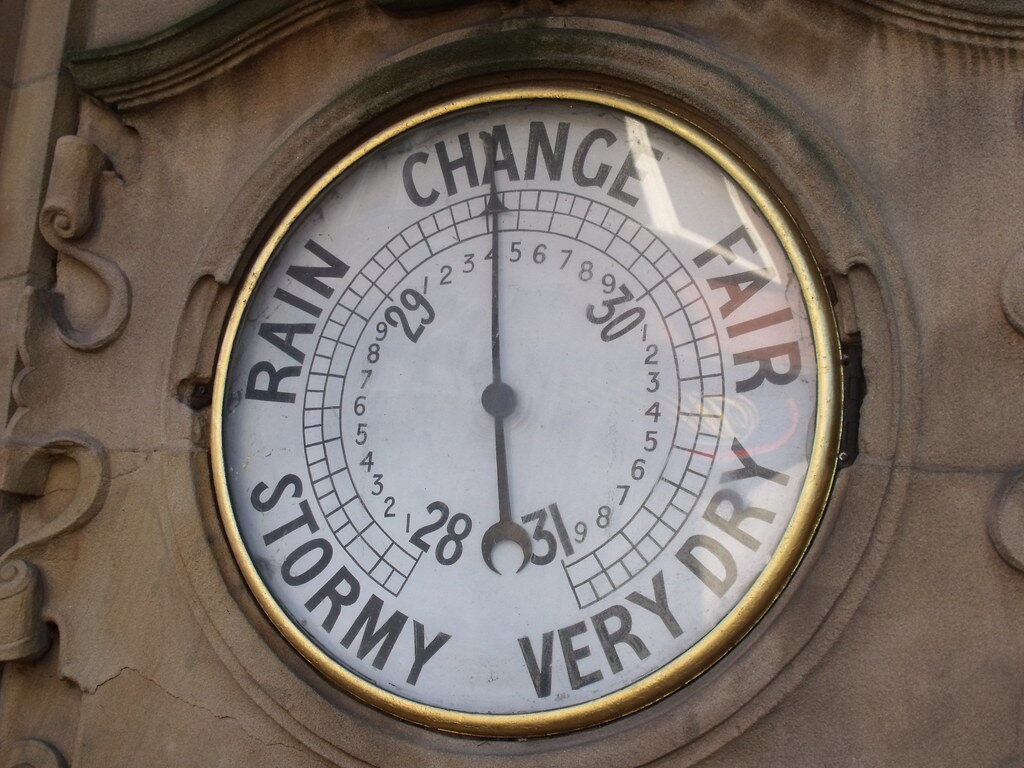
Cirrusly Weather sells different types of barometric pressure gauges used to measure atmospheric pressure. This has direct effects on the weather you experience: rising or high pressure brings improving or fair conditions; falling or low pressure is a sign of unsettled weather.
Barometric pressure—the weight of the atmosphere measured in millibars (mb) or inches of Mercury (inHg)—affects weather patterns, fish behavior, and human physiology.
The Three Main Types of Barometric Pressure Gauges
There are three primary barometer types, each with distinct advantages and use cases:
1. Mercury Barometers
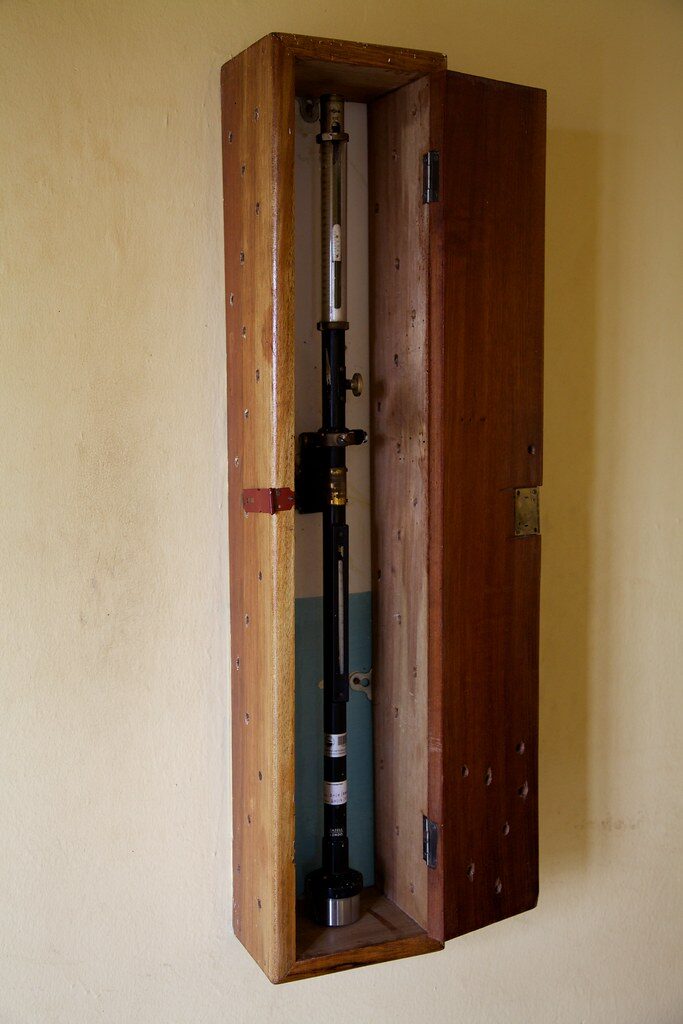
Mercury barometers are the traditional standard for atmospheric pressure measurement, and were invented nearly four centuries ago. They use a column of mercury in a glass tube to indicate pressure changes. When atmospheric pressure rises, it pushes the mercury higher; when pressure falls, the mercury drops.
Due to the toxicity of mercury and their cost, these types of barometers are rarely found outside of scientific applications or collections. Cirrusly Weather does not sell mercury barometers for this reason.
- Accuracy: Highly accurate and reliable
- Durability: Long-lasting if handled carefully
- Drawbacks: Fragile, toxic if broken, expensive
- Best for: Laboratory use, professional meteorology, collectible heritage instruments
2. Aneroid Barometers
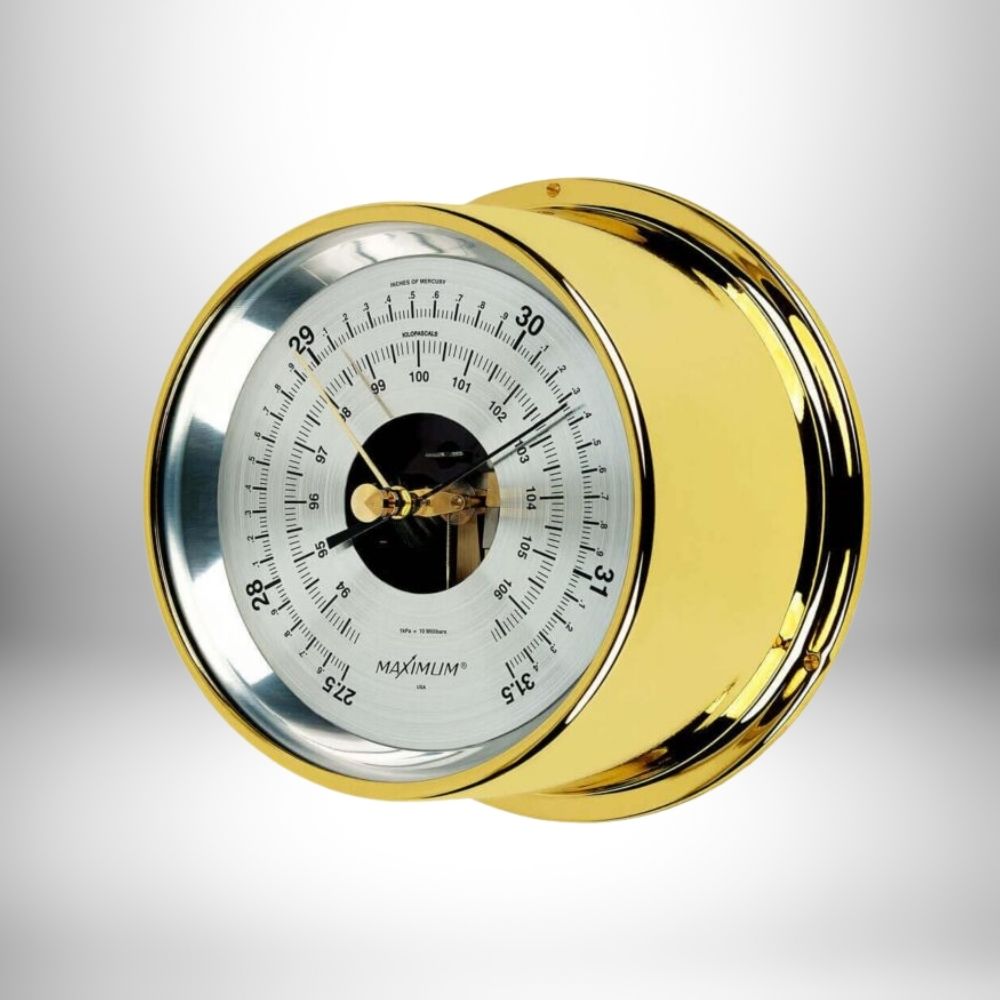
Aneroid barometers use a sealed metal chamber (an aneroid cell) that expands and contracts with pressure changes. A needle connected to the cell moves across a calibrated dial to show the current atmospheric pressure.
Maximum’s Predictor and Proteus barometers are two examples of aneroid barometers. One of their biggest advantages is their significantly lower cost and mechanical nature, versus the liquid-driven mercury barometers.
- Accuracy: Good; slightly less precise than mercury
- Durability: Portable and robust
- Advantages: No liquid, safe, affordable, portable
- Best for: Home weather monitoring, outdoor enthusiasts, boating, aviation
3. Digital Barometers
Digital barometers use electronic sensors to measure atmospheric pressure and display readings on an LCD or digital screen. Many modern weather stations and smartphones include digital barometric sensors.
While Maximum’s Mystic Thermometer/Barometer is digital, far cheaper versions exist as part of all-in-one weather stations like the Davis Vantage Vue and Vantage Pro2.
- Accuracy: Highly accurate with trend indicators
- Features: Weather forecasting, trend arrows, data logging
- Advantages: Easy to read, portable, often multi-function
- Best for: Modern weather stations, hiking, fishing, real-time monitoring
Common Uses for Barometers
Any of the barometers above can be used in a variety of ways and applications. The first you’re probably well aware of, but barometers are useful for a variety of outdoor activities.
Weather Prediction
Falling barometric pressure often indicates approaching storms or precipitation; rising pressure typically signals improving weather. This makes barometers valuable tools for outdoor planning and weather forecasting.
Hiking and Mountaineering
Barometric altimeters use pressure to calculate altitude, helping hikers navigate and estimate elevation gain without GPS. They’re especially valuable in areas with poor cell coverage or when GPS batteries are low.
Fishing
Fish behavior responds to barometric pressure changes. Anglers use barometers to time their fishing trips—stable or rising pressure often brings better fishing, while rapid pressure drops can affect fish feeding activity.
Choosing the Right Barometer for Your Needs
Which barometer should you choose? Here are our recommendations.
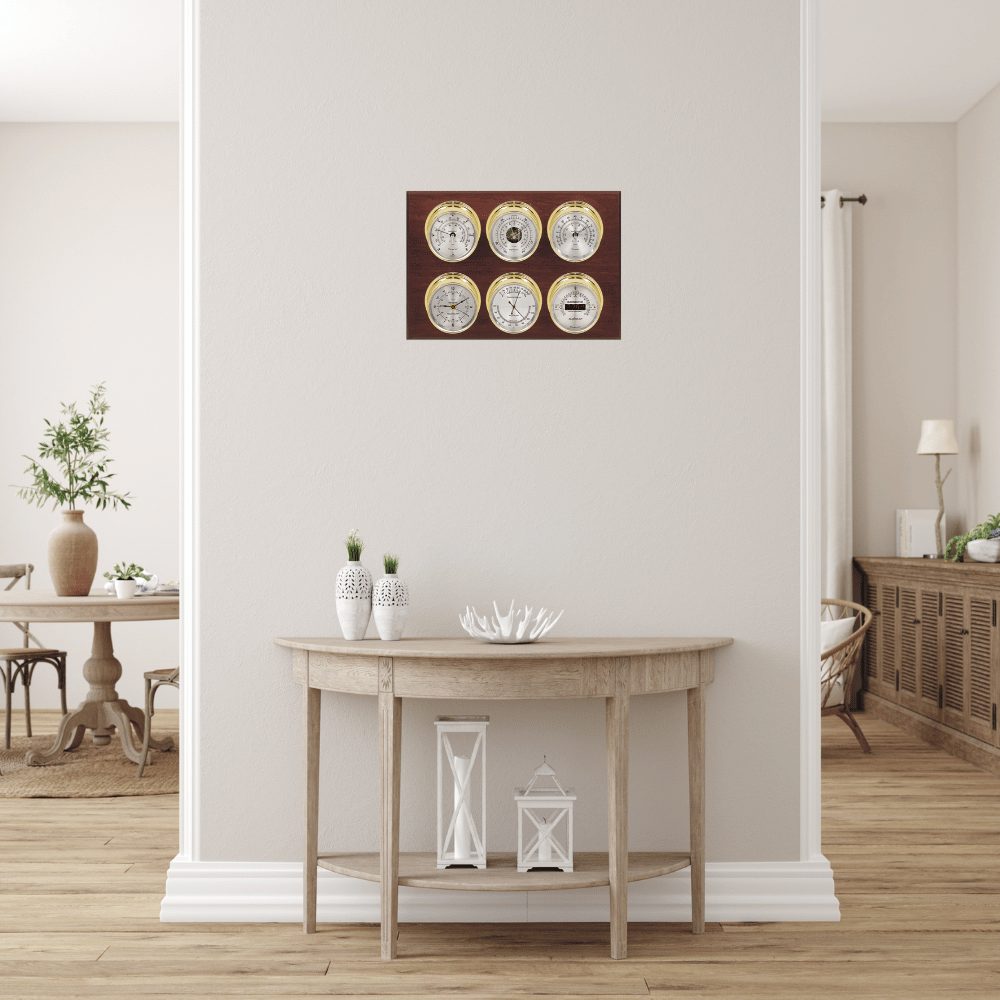
For home weather monitoring: An aneroid barometer or digital weather station offers affordability, ease of use, and reliable data without maintenance.
For outdoor activities (hiking, camping, boating): A portable digital barometer or barometric altimeter provides real-time pressure data and weather trend warnings in a compact, durable package. Sun Company’s Altimeter 202 is a popular choice here.
For fishing: A digital barometer with clear trend indicators helps you identify optimal fishing conditions based on pressure patterns.
For professional or heritage use: A precision mercury barometer delivers unmatched accuracy for scientific work or as a decorative instrument that marks atmospheric shifts with classical elegance. You can find several options right here.
Key Takeaway
Whether you’re a weather enthusiast, outdoor adventurer, or angler, understanding barometric pressure and choosing the right measurement tool can enhance your safety, planning, and enjoyment. Each barometer type has strengths—select one that matches your accuracy needs, portability requirements, and budget.