
Barometric pressure and fish behavior are linked. As the weight of the atmosphere above water changes, fish behave differently. Understanding this link significantly improves your catch rates and helps you time your fishing trips for maximum success.
While you might think a barometer is just for predicting the weather – that’s actually just part of what a barometer can do. Anglers have been using barometers for decades, and we’ll explain how to use pressure data yourself to have a better day out on the water.
Barometric Pressure and Fish Behavior
To understand why fish are so sensitive to pressure changes, we first must explain a little bit about their physiology and how they float in the water in the first place.
Fish have swim bladders (gas-filled sacs) that allow them to maintain neutral buoyancy. When barometric pressure changes rapidly, fish must adjust their swim bladder pressure to stay at their preferred depth. This adjustment requires energy and can affect their feeding behavior.
High Pressure (Rising Pressure)
- Fish tend to move shallower and become more active
- Feeding activity often increases—fish are more willing to strike
- Ideal conditions for fishing; expect good action
- Fish spread out across deeper zones and feed throughout the water column
Low Pressure (Falling Pressure)
- Fish move deeper to compensate for reduced surface pressure
- Feeding activity decreases—fish become sluggish and selective
- Challenging fishing conditions; expect slower action
- Fish concentrate near structure (rocks, logs, weeds) where they feel secure
Stable Pressure
- Fish behavior is predictable and consistent
- Feeding patterns are normal; fish are comfortable in their environment
- Good fishing conditions across most of the day
Rapid Pressure Changes and Feeding Activity
The speed of pressure change matters as much as the direction. A rapid pressure drop (such as before a thunderstorm) often triggers a feeding frenzy as fish sense the incoming weather change and feed aggressively before conditions shift. Conversely, a rapid rise in pressure can temporarily make fish inactive as they adjust to the new pressure equilibrium.
Using a Barometer to Plan Your Fishing Trips
Best Fishing Pressure Conditions
- Steadily rising pressure: Excellent fishing for most species
- Stable high pressure: Good daytime action; slightly slower in early morning
- Rapid pressure rise: Brief slowdown followed by active feeding
Challenging Fishing Pressure Conditions
- Steadily falling pressure: Slower action; fish move deeper and feed less
- Stable low pressure: Difficult all-day fishing; focus on structure
- Rapid pressure drop: Pre-storm feeding window (excellent short-term); followed by reduced activity
Barometer Selection for Anglers
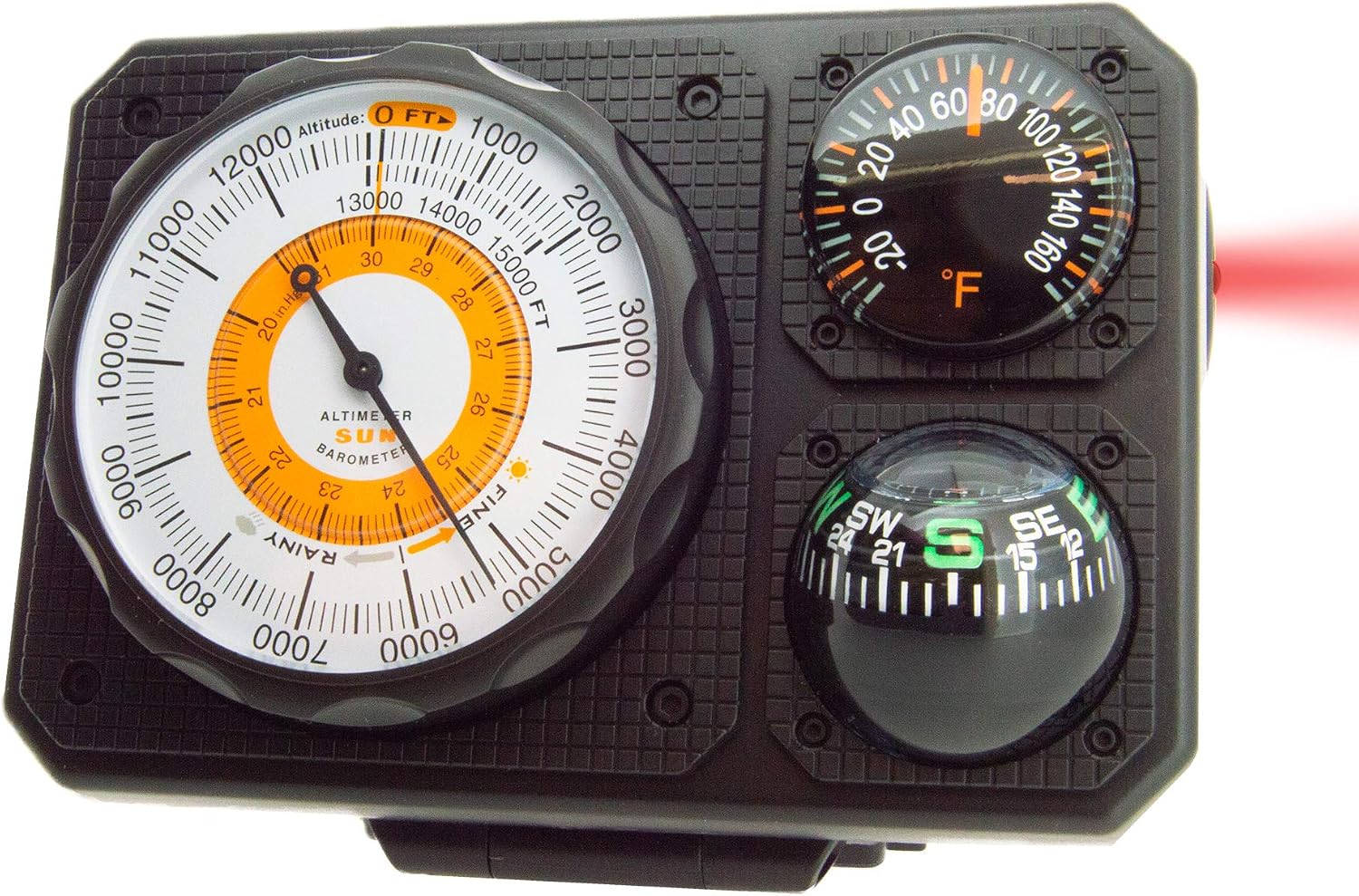
For fishing, a portable digital or analog barometer with trend indicators is ideal. Look for:
- Trend arrows or trend history: Shows whether pressure is rising, falling, or stable
- Portability: Fits in a tackle box or backpack
- Weather forecasting function: Some models predict upcoming weather patterns
- Waterproofing: Essential for boat or wade fishing
Either Sun Company’s Altimeter 202 or Navigat’r 6 are good options for their portability.
Combining Barometric Pressure with Other Factors
Barometric pressure is one piece of the fishing puzzle. Combine it with:
- Time of day: Early morning and late evening often produce well regardless of pressure
- Water temperature: Fish are more active in comfortable temperature ranges
- Moon phase: Some anglers believe certain moon phases improve fishing success
- Season: Spawn seasons and migration patterns override pressure effects
- Location and structure: Where fish live matters more than what the barometer says
Key Takeaway
While barometric pressure alone won’t guarantee a successful fishing trip, understanding how fish respond to pressure changes gives you an edge. Rising or stable pressure often delivers the best action; falling pressure requires patience and a focus on deeper structure. Pair this knowledge with a quality barometer and other environmental factors to maximize your time on the water.